EN

Center of Gravity, or CG, is one of the most critical factors for safe and predictable flight. Every RC aircraft comes with a factory-recommended CG position. Most manufacturers allow a tolerance range of roughly ±10 mm forward or backward from the marked point. This small window lets pilots fine-tune handling based on personal preference, with some opting for slightly nose-heavy or tail-heavy setups.
The CG of a plane is the point where all gravitational forces converge, the forward‑aft balance point of the airframe. A simple way to picture it is the pivot of a seesaw.
High-wing trainers are the simplest models to balance, and this is often the first plane for new hobbyists.
Start by checking the model’s manual to find its official CG mark. As a general rule of thumb, the CG usually sits around 25% to 33% of the wing chord back from the leading edge. The main wing spar frequently falls within this zone. This is only a rough guideline. In practice, CG can fall anywhere between 25% and 50% chord for many designs; positions outside this range are uncommon but not impossible.
The fingertip method remains the most popular way hobbyists check CG at home. Place your index or middle fingertips underneath the wing, aligned exactly on the CG reference line, a few inches away from the fuselage. Lift the model gently and let it hang freely.
Important: Always balance the plane at its all-up weight (AUW), with the battery installed, just as it would be ready to fly.
When balanced correctly, the plane will hang level or tilt slightly nose-down. If the tail drops, the model is tail-heavy. Tail-heavy setups are less stable and harder to control, which is especially risky on a maiden flight, so new pilots should avoid this condition.
You can shift the battery forward or backward to adjust the CG. A slight nose-heavy tendency is acceptable for many models, especially warbirds. For example, if the recommended CG is 75 mm from the leading edge, moving it forward to around 70 mm gives a mild nose-heavy feel. Shift the battery forward if space allows, or add nose weight to achieve this.
Many pilots prefer to balance low-wing warbirds upside down. Both upright and inverted checking work for low-wing models, as long as you follow the specified CG reference line. It is simply a matter of personal comfort.
If moving internal components or the battery cannot bring the CG into range, you will need to add weight to the nose or tail. Always try repositioning parts first; adding lead weights should be your final adjustment step.
For higher precision, you can use a dedicated CG balancer (also called a CG machine). Choose one rated to support your model’s size and weight, and follow the manufacturer’s instructions for operation.
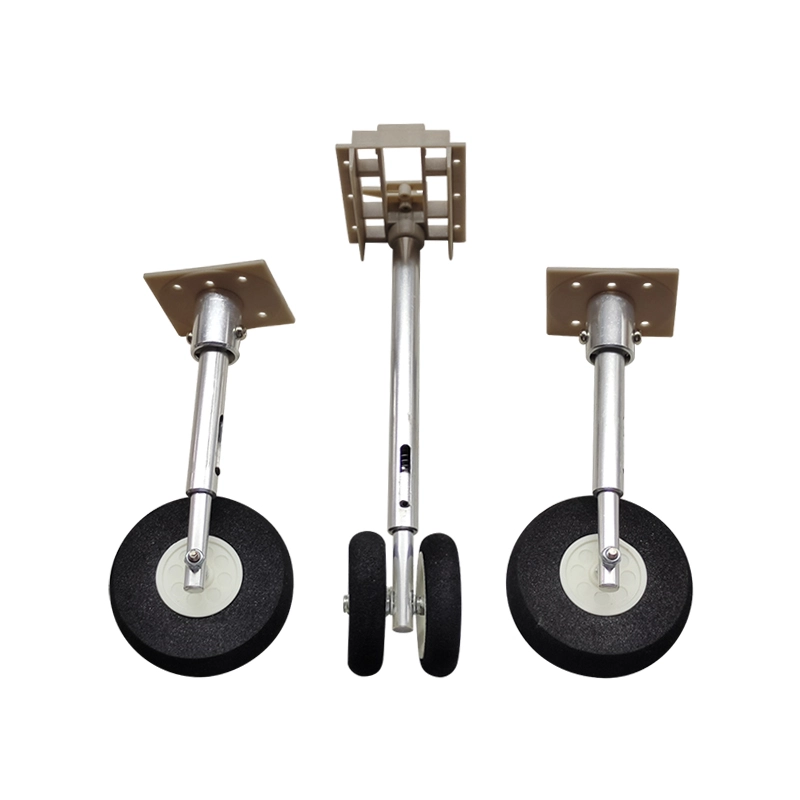
There is a long-running discussion among RC pilots about the correct CG checking method for planes with retracts. Some argue for balancing with gear down, since takeoff and landing — slower flight phases — are the most critical moments. Still, the widely accepted practice for low-wing warbirds is to balance with the gear retracted, matching the configuration used during normal cruising flight.
For most taildragger warbirds, the main landing gear angle does not create a huge weight shift between gear-up and gear-down states. The difference is minimal, so balancing with gear up remains standard.
Wrapping up, CG balancing is not complicated, yet it cannot be skipped. A properly balanced airframe flies smoother, more steadily and is far more forgiving in the air. Poor CG tuning will create tricky, unpredictable flight characteristics.
Browse our Compo RC range of RC aircraft accessories to support your build and setup. Happy flying and safe landings!
Copyright © 2005-2026 MySite Ltd. All Rights Reserved. POWERED BY UEESHOP